

How to Choose the Right Bath for Your Bathroom: A UK Buying Guide
Learn how to choose a bath for your UK bathroom by comparing bath types, sizes and materials, and understanding what to measure before you buy.

Read aloud in your browser. Nothing is sent to us.
Choosing a new bath is one of the bigger decisions in a bathroom plan. Knowing how to choose a bath starts with considering the size and layout of your room, your plumbing requirements, how you plan to use it and the style you want to achieve.
There are six main types to choose from: practical single-ended baths, comfortable double-ended designs, L-shaped and P-shaped baths for bathing and showering, statement freestanding baths and whirlpool baths with water jets.
This guide explains each type, explores common UK bath sizes, covers what to measure before you buy and helps you find the right bath for your bathroom.
Before You Choose a Bath: 6 Things to Check
- Bathroom size: measure the available length and width rather than choosing on looks alone.
- Layout: check how the bath will sit alongside the toilet, basin, shower and door.
- Plumbing: note where the water and waste connections are now and whether they would need to move.
- How you use it: decide whether it will mainly be for bathing, showering or both.
- Style: choose a design that works with the rest of the room, including the taps, basin and brassware.
- Access: check doorways, corridors and stairs on the route into the bathroom before ordering.
Which Type of Bath Should You Choose?
The best type depends on the room and what you need from it. Here are the main options.
1. Single-Ended Baths
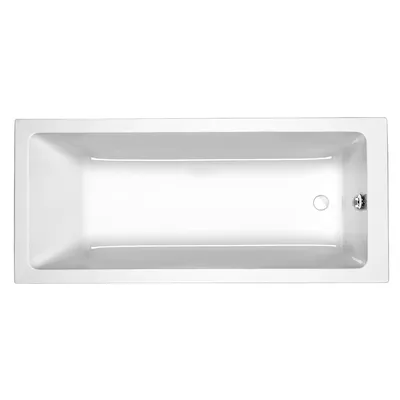
A single-ended bath is the practical choice for many UK family bathrooms. One end is shaped for reclining, and the taps and waste sit at the other. That simple layout also makes it the most common bath to have a shower fitted above it.
A single-ended bath may suit you if:
- you need a practical bath for everyday use
- you are planning a family bathroom
- you want to combine bathing and showering
- the bath will sit against a wall
- you need to make the most of the space
2. Double-Ended Baths
A double-ended bath slopes at both ends, with the taps and waste usually in the middle. The result is a balanced, symmetrical look and room to recline at either end, or for two people to share.
A double-ended bath may suit you if:
- you want a symmetrical bathroom design
- you want to be able to recline at either end
- your bathroom has the length for a slightly larger bath
- you prefer a contemporary or more premium look
3. L-Shaped Baths
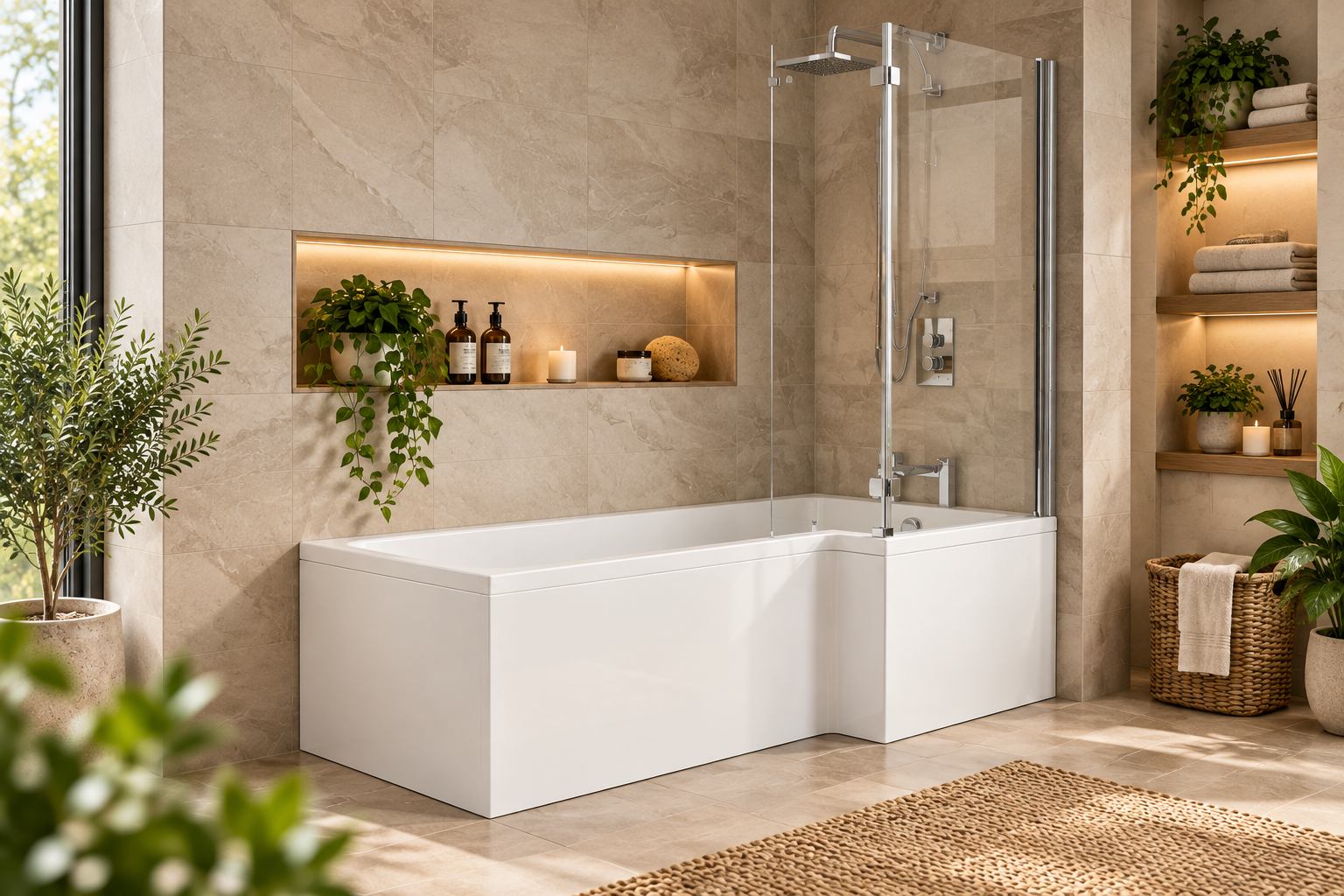
An L-shaped bath combines bathing and showering in one unit. One end is squared off and wider, giving more room to stand under the shower than a standard straight bath.
An L-shaped bath may suit you if:
- you want a bath and shower in one space
- you are planning a family bathroom
- you want a wider showering area
- you prefer a clean, angular design
4. P-Shaped Baths
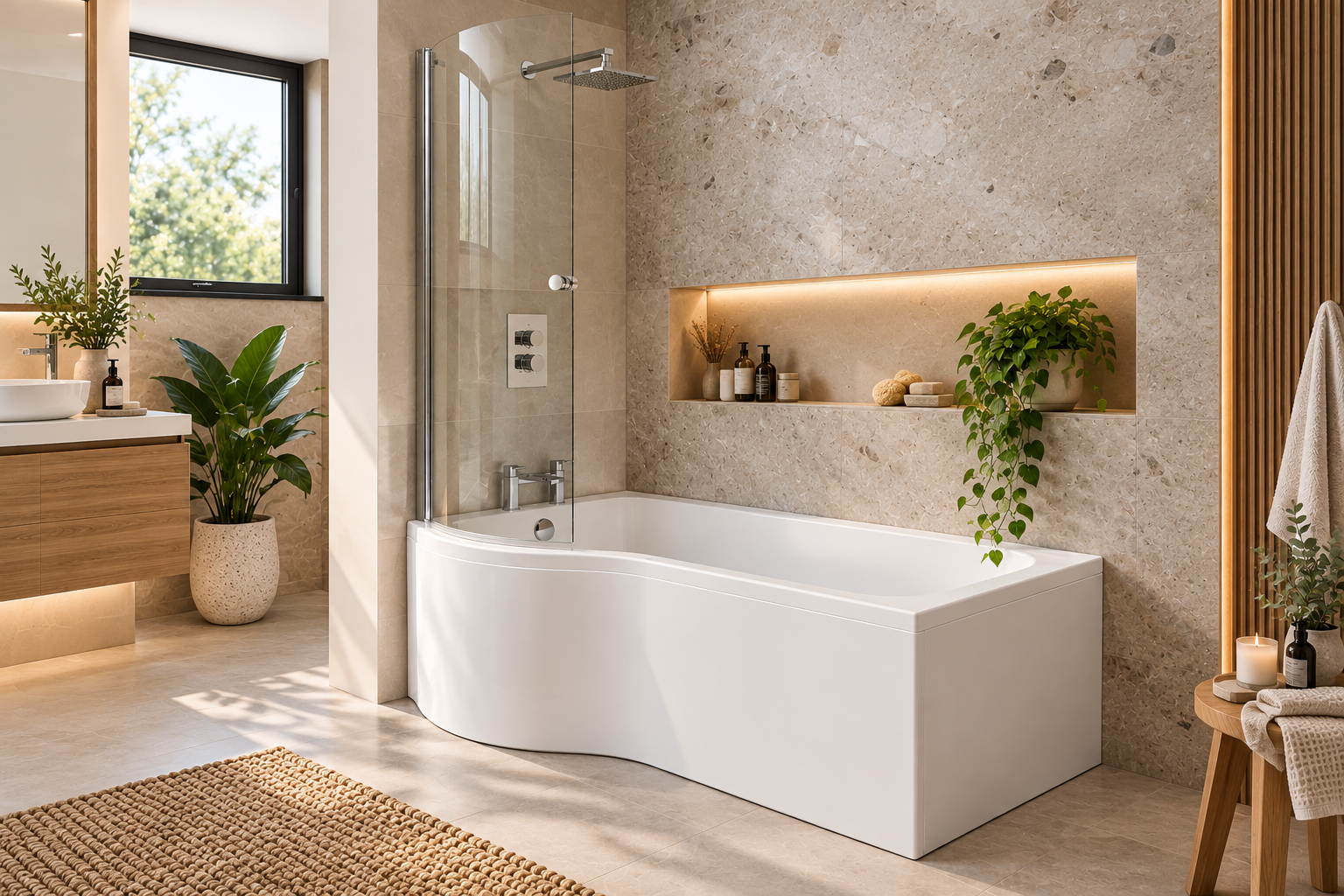
A P-shaped bath has a straight bathing area with a curved, wider end for showering. Like the L-shaped bath, it gives you a bath and shower in one space without a separate enclosure, but with a softer profile.
A P-shaped bath may suit you if:
- you want a wider showering area than a straight bath gives
- you need to combine bathing and showering
- the curved end will fit your layout
- you have checked whether you need the left-hand or right-hand version
Both L-shaped and P-shaped baths are made in left-hand and right-hand versions, and each one needs a matching bath screen and panel.
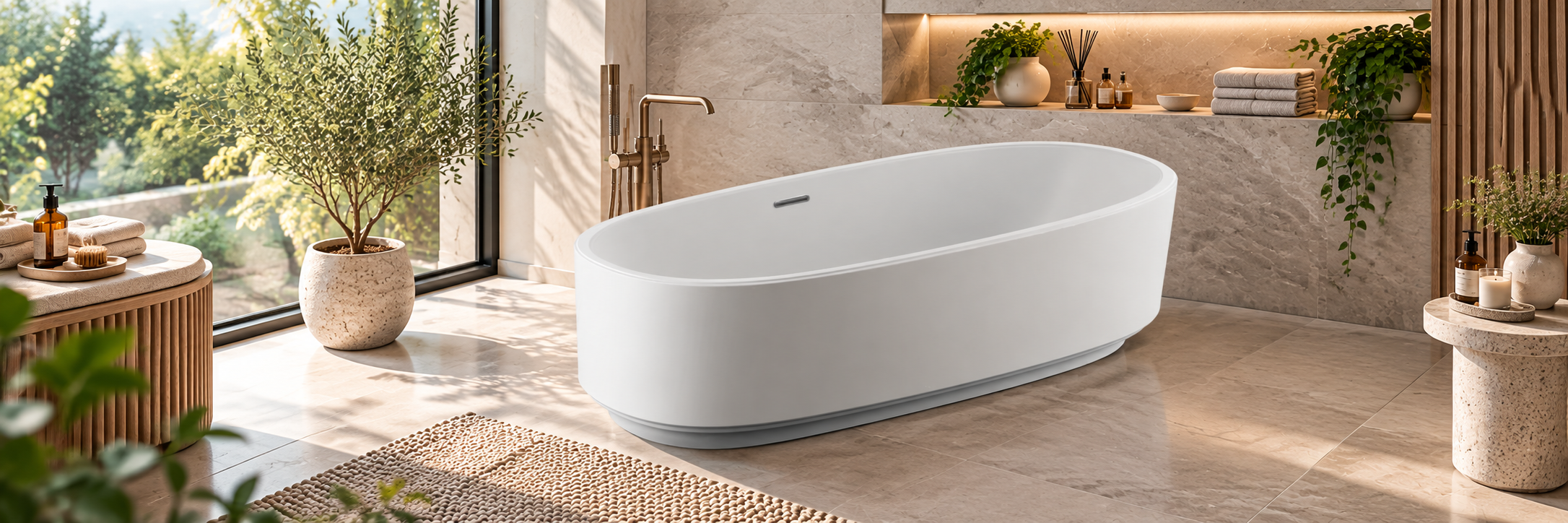
5. Freestanding Baths
A freestanding bath is the strongest focal point a bathroom can have, and it works best where there is open floor space around it. The look is luxurious, but the practical details matter just as much.
A freestanding bath may suit you if:
- you want the bath to be the centrepiece of the room
- your bathroom has open floor space around the bath
- you can plan the water and waste around where it will stand
- you are choosing floor-standing or wall-mounted bath taps to go with it
Check the weight before you buy. An acrylic freestanding bath is relatively light, but stone resin and cast-iron baths can weigh well over 100 kg before they are filled. The exact weight depends on the bath's material, size and model, so check the manufacturer's product specifications before purchasing. If you are installing a heavy bath upstairs, make sure the floor can support the load and consult a qualified professional if necessary.
For more on this style, read our guide to the best modern freestanding baths.
6. Whirlpool Baths
A whirlpool bath uses a system of water jets for a more spa-like bath. As well as the look, think about installation, cleaning and maintenance.
A whirlpool bath may suit you if:
- you want a bath with built-in water jets
- you have space for the model you choose
- you can meet the manufacturer's installation requirements
- you are happy with the extra cleaning and maintenance
A whirlpool bath may require a dedicated electrical supply and specific installation arrangements. Check the manufacturer's installation instructions and use appropriately qualified professionals for the plumbing and electrical work. In England and Wales, applicable bathroom electrical work must comply with the relevant Building Regulations. Leave access to the pump for servicing and maintenance. Our guide to the best whirlpool baths goes into more detail.
What Size Bath Do You Need?
Start with the space you have rather than choosing a bath based on standard dimensions alone. The following are typical UK bath sizes to use as a starting point; actual dimensions vary by style and manufacturer.
| Bath size | Typical dimensions | Good for |
|---|---|---|
| Compact | 1400–1600 mm long | Small bathrooms and en suites |
| Standard | 1700 × 700 mm | Most UK bathrooms; the most common size |
| Large | 1800 mm or longer; some models are around 800 mm wide | Larger bathrooms and selected double-ended baths |
| Shower bath (L or P-shaped) | Often around 1500–1700 mm long, with a wider showering end | Combining bathing and showering |
Bath dimensions vary by model, so compare the full external dimensions listed on the product page with your available space. Allow sufficient clearance around the toilet, basin and door, and check the manufacturer's technical drawing before ordering.
How to Measure for a New Bath
- Measure the available length: the wall or floor area where the bath will sit.
- Measure the available width: check the bath will not clash with the toilet, basin, shower or door.
- Check the plumbing positions: note where the water and waste connections are, and talk to your installer if they need to move.
- Check the orientation: for L-shaped and P-shaped baths, confirm whether you need the left-hand or right-hand version.
- Check access to the room: measure doorways, hallways and stairs so the bath can be carried in.
- Check the technical drawing: use the manufacturer's exact dimensions before you place an order.
What Bath Material Should You Choose?
The material of your bath can affect its weight, durability, heat retention, surface finish and cleaning requirements. These factors can vary depending on the product's construction, thickness and quality, so check the manufacturer's specifications before making your choice.
-
Acrylic: Generally lightweight, warm to the touch and available in a range of shapes and finishes. Installation and durability depend on the specific model and its construction.
-
Steel enamel: Usually has a hard, glossy surface. Its resistance to wear and its weight depend on the steel thickness and enamel finish.
-
Stone resin: Often used for contemporary freestanding baths, with a solid feel and matt or gloss finishes. It can be considerably heavier than acrylic, depending on the construction.
-
Cast iron: Known for its durability and heat retention, but it is very heavy and may require additional consideration for floor support.
Always check the material, product weight, dimensions and care instructions on the individual product page. For heavier baths, confirm that the floor can safely support the bath when filled and in use.
Don't Forget the Details Around the Bath
The bath is only one part of the finished bathroom. Depending on the model, you may also need bath taps, a waste and overflow, a bath panel and, for a shower bath, a bath screen. Check what is included and what each product is compatible with before ordering, particularly if you are replacing an existing bath.
Comparing Bath Types at a Glance
| Bath type | Best suited to | Main advantage |
|---|---|---|
| Single-ended | Family and practical bathrooms | Versatile and straightforward |
| Double-ended | Comfort-focused bathrooms | Symmetrical design, recline at either end |
| L-shaped | Bath and shower layouts | Wider, squared showering area |
| P-shaped | Bath and shower layouts | Wider, curved showering area |
| Freestanding | Larger bathrooms | Strong visual impact |
| Whirlpool | Relaxation-focused bathrooms | Spa-like water jets |
A Simple Decision Guide
- Want a practical family bath? Start with a single-ended bath.
- Want a balanced, comfortable design? Consider a double-ended bath.
- Need to bathe and shower in one space? Consider an L-shaped bath.
- Want a curved bath-and-shower layout? Consider a P-shaped bath.
- Want a statement centrepiece and have the space? Consider a freestanding bath.
- Want a spa-like bath? Consider a whirlpool bath.
Final Thoughts
Choosing a bath is much easier when you start with the practical details. Measure the room, understand the layout and decide how you will use the bath before choosing a style.
Then compare the options: single-ended for everyday practicality, double-ended for a balanced design, L-shaped or P-shaped for bathing and showering, freestanding for a statement finish, or whirlpool for a spa-like bath. Once you have a style in mind, check the exact dimensions, orientation and plumbing on the technical drawing before ordering.
Ready to choose? Explore the Pure Lavish baths collection and compare styles and sizes for your bathroom.
FAQs
What type of bath is best for a small bathroom?
A compact single-ended bath, or a smaller L-shaped or P-shaped shower bath, usually works best. Baths from 1400 mm to 1600 mm long are made for smaller rooms. Check the full external dimensions and leave clearance around the other fittings.
Is a single-ended or double-ended bath better?
Choose a single-ended bath for everyday practicality, particularly if you plan to install a shower above it. A double-ended bath is worth considering if you prefer a symmetrical design and want to recline at either end.
What is the standard bath size in the UK?
Around 1700 × 700 mm is a common UK bath size, but there is no single size that suits every bathroom. Compact and larger models are also available, so check the dimensions of the individual bath before buying.
What is the difference between an L-shaped and a P-shaped bath?
An L-shaped bath has a squared, angular showering end, while a P-shaped bath has a curved, wider end. Both combine bathing and showering, so choose the shape that best fits your bathroom layout.
Are L-shaped and P-shaped baths good for showering?
They can be a practical choice because their wider ends provide more standing space than many straight baths. Check the shower screen compatibility, dimensions and left-hand or right-hand orientation before ordering.
What should I check before ordering a bath?
Measure the available space, confirm the bath's dimensions and orientation, check the tap and waste positions, and make sure the bath can be carried into the room. Review the manufacturer's technical drawing before ordering.
Do whirlpool baths need special installation?
Whirlpool baths require plumbing and may have additional electrical and installation requirements. Follow the manufacturer's instructions, arrange suitable professional installation and ensure the pump remains accessible for maintenance.
In this guide
More from the journal
Written by
Sophie Carter
Questions about anything in this guide go to the same people who wrote it, and they answer them.
Ask a question